
Updated: 2026-10-04
Black spots at an AC outlet: what can be wiped safely?
A model-specific boundary between wiping the visible outlet surface and stopping before fingers, tools, water, or cleaner reach the internal fan and electrical parts.
Short Answer
Black spots at an air-conditioner outlet cannot be identified as mold, dust, or oily buildup from appearance alone. Find the indoor-unit model manual first and follow its shutdown method, louver-opening steps, and permitted cloth or cleaner. Wipe only the visible casing or louver surface that the manual allows, without removing parts or applying force. Do not insert fingers, sticks, brushes, or a vacuum nozzle behind the louvers, turn the blower by hand, spray water or cleaner inside, or dismantle covers. If dark buildup continues deeper inside, returns after wiping, falls out as dark debris, or accompanies odor, leakage, noise, or a warning light, do not assume surface cleaning is enough; share the model and safe photos to discuss internal cleaning or inspection.
Checklist
- ・Do not identify every black spot as mold from appearance alone
- ・Use the exact model manual for shutdown and louver access
- ・Wipe only a visible surface that the manual permits
- ・Keep fingers, tools, water, and cleaner away from the internal fan
- ・Seek cleaning or inspection for recurrence, debris, odor, leakage, or noise
Evidence guide
Safety boundary for black spots at the outlet
Do not diagnose the material by sight. Separate model-approved surface care from conditions that need internal cleaning or inspection.
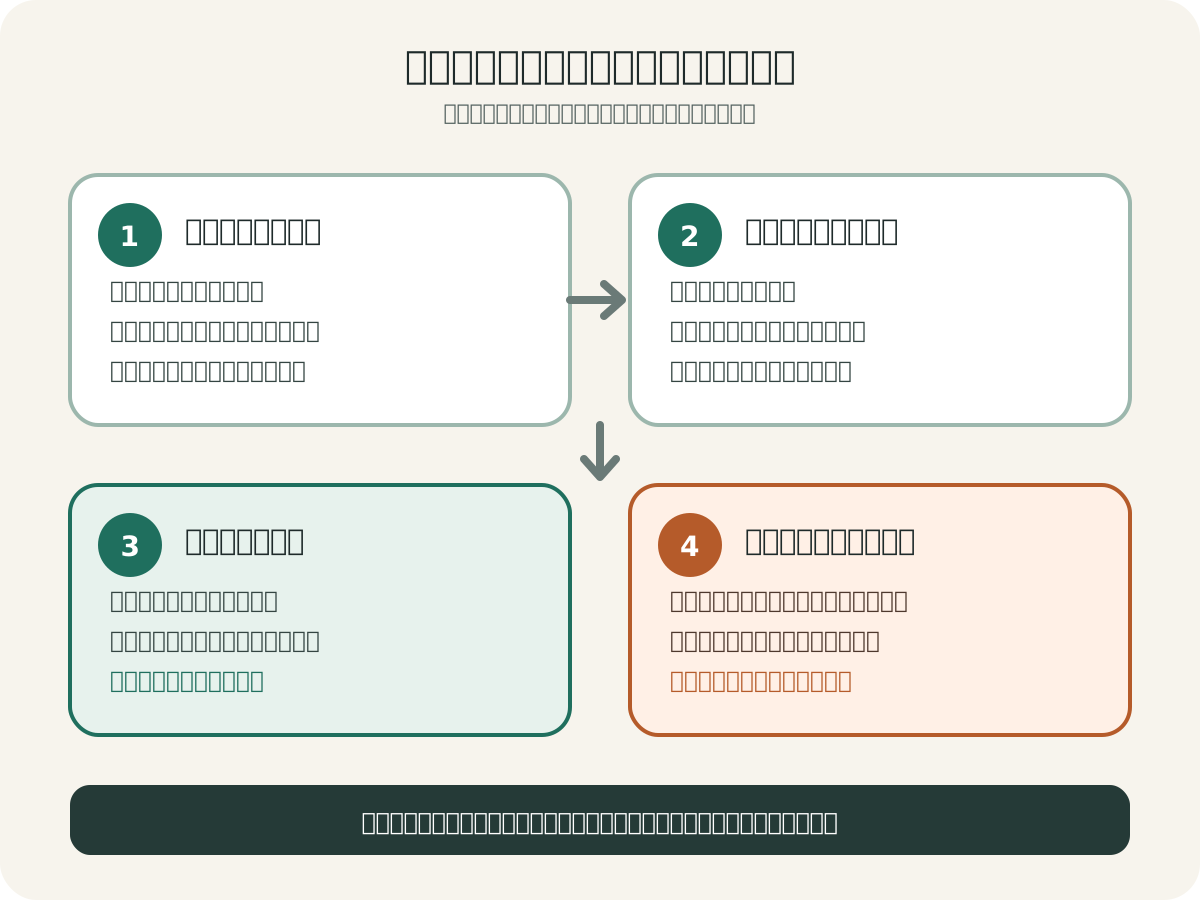
Evidence 1
Louver access and care are model-specific
Hitachi says opening procedures differ with louver design and model. It describes supporting the louver and wiping gently with a soft cloth. Do not generalize one product's control sequence.
Hitachi: vertical-louver care (Japanese)Evidence 2
Published guidance permits a soft dry wipe on the louver surface
Panasonic's general care page tells users to dry-wipe louvers with a soft cloth. Cleaner use and part movement still depend on the exact model manual.
Panasonic: care before seasonal use (Japanese)Evidence 3
Do not insert fingers or objects beyond the louvers
A Panasonic manual warns users not to put fingers or objects behind the indoor-unit louvers because the internal fan can rotate at high speed. Other models require their own manuals.
Panasonic: room air-conditioner manual (Japanese PDF)Evidence 4
Internal cleaning liquid can create a fire risk
NITE documents a fire after cleaning liquid reached electrical parts and caused electrical tracking. Surface wiping must not be treated as permission to spray liquid into the interior.
NITE: fire involving internal cleaning liquid (Japanese)Official materials checked: 2026-10-04. Apply the instructions for the exact model and site.
Do not diagnose black spots from appearance alone
Moisture and buildup can contribute to dark marks, but a room-side view cannot identify mold, dust, oily residue, or the condition of the full interior. Record whether the marks are limited to the louver surface, continue toward the blower, fall as dark debris during operation, or accompany odor or leakage. A photo communicates location; it does not confirm the substance or cause.
Before cleaning, use the model manual for shutdown and access
The louver-opening method, plug or breaker steps, permitted parts, and cleaner restrictions vary by model. Hitachi publishes different procedures for different louver designs, including models that need a dedicated control sequence. Panasonic manuals also warn against putting fingers or objects beyond the louvers. Do not substitute a video for a similar-looking unit. Use the maintenance section for the indoor-unit model, and do not climb on an unstable platform to reach it.
Limit home care to the visible surface allowed by the manual
When the exact manual permits it, support the louver and wipe gently with a dry soft cloth, or a well-wrung cloth that cannot drip. Panasonic publishes dry-wipe guidance for louvers, while Hitachi describes supporting a louver from behind and wiping it gently. Whether detergent is allowed, a louver may be moved by hand, or a panel may be removed remains model-specific. Do not bend a part or push residue farther inside.
Keep fingers, tools, and liquid away from the internal fan
A blower, motor, sensors, wiring, and electrical parts sit behind the outlet. Do not insert a stick, brush, vacuum nozzle, finger, or cloth beyond the permitted surface, turn the blower by hand, spray water or cleaner, or remove covers. NITE documents a fire after cleaning liquid reached electrical parts and caused electrical tracking. Internal washing is not replaced safely by a retail spray.
A clean louver does not prove that the interior is clean
Wiping the visible surface does not show the condition of the blower, heat exchanger, or drainage path. Marks that return quickly, dark buildup visible on the blower, falling debris, or persistent musty odor require a broader check. Automatic filter cleaning is not the same as washing the outlet interior, so identify the feature from the model rather than a button name alone.
Leakage, noise, or burning odor changes the task from simple care
Leakage, reduced airflow, unusual noise, or a warning light can involve more than surface dirt. Stop immediately rather than cleaning or retesting after a burning smell, smoke, sparks, or abnormal heat. Also stop if a louver no longer closes, a part comes loose, or the unit makes a new noise after wiping. Ask the retailer, maker, or a provider whose cleaning and inspection scope is clear.
Share the model and the location of the marks
From a safe position, photograph the complete indoor unit, readable model label, outlet from a short distance, mark location, and nearby working area. Do not force the louver open or lean from a ladder for a closer picture. State the operating mode when odor appears, when debris began falling, any leakage or noise, and whether a cleaning spray was previously used. Photos help define the next check, but do not set final eligibility or price by themselves.
Discussing buildup behind the outlet in Nagoya
If dark buildup, odor, or falling debris remains after the model-approved visible surfaces are wiped, share the model, mark location, installation, and any previous spray use. Standard wall-mounted AC cleaning starts from ¥10,000; self-cleaning models start from ¥16,000, including tax. These are starting prices, not a flat total for every model, site, or added task. Leakage, unusual noise, a warning light, or burning odor is separated from routine cleaning and may require inspection or repair.
References
Need help with the actual work?
Photos and a short description help us understand what work may be needed.