
Updated: 2026-08-14
Should you spray water on an aircon outdoor unit? Safer checks behind a viral heatwave tip
A viral social-media tip suggests cooling an outdoor unit with water. Here is what manufacturers warn against and what you can check safely instead.
Short Answer
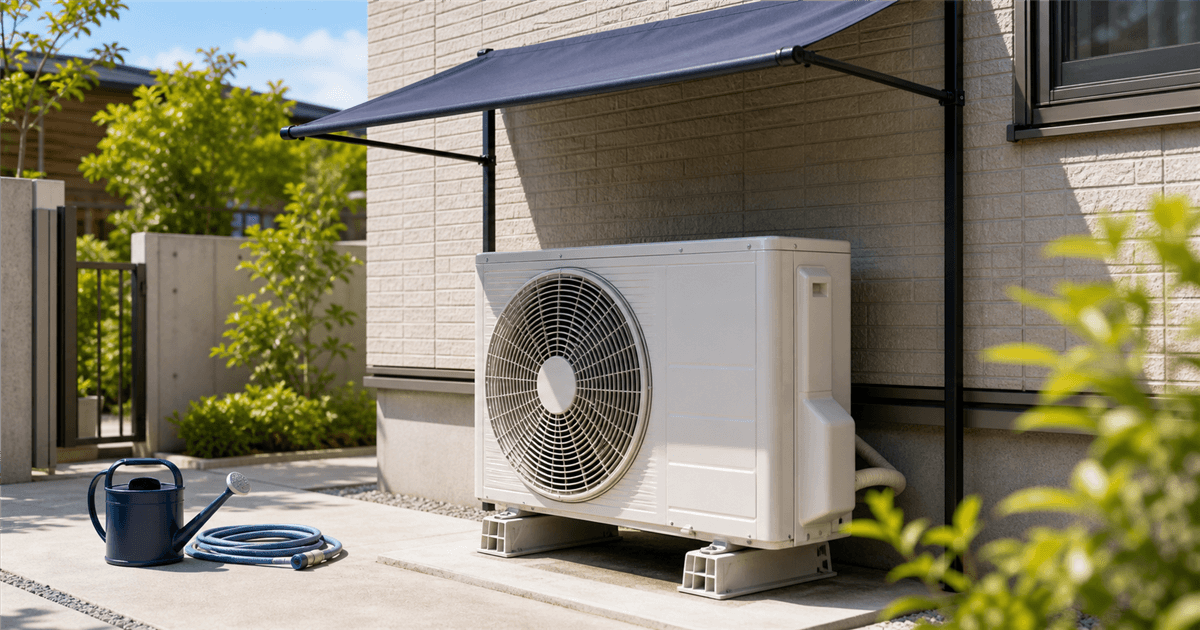
Do not spray water into an outdoor unit or toward its electrical components to cool it. Although the idea is circulating on social media, manufacturers warn that water entering the unit can cause failure, electric shock, or fire. Keep the intake and exhaust clear, use a separate shade only when it does not restrict airflow, and arrange an inspection if cooling remains weak or the unit repeatedly stops or makes unusual noise.
Checklist
- ・Do not spray water into the unit or toward electrical parts
- ・Do not place a wet towel on the unit or block its intake and exhaust
- ・Move planters, storage boxes, and covers away from the airflow path
- ・Keep any sunshade separate from the unit and preserve ventilation
- ・Stop using the system and seek help for weak cooling, unusual noise, burning odor, or repeated shutdowns
A viral tip does not make direct spraying safe for every home unit
On July 22, 2026, a discussion on X focused on cooling outdoor units with water during extreme heat. The equipment and conditions shown in a post may not match the construction or installation of the unit at your home. Mitsubishi Electric advises against putting water into an outdoor unit because it can cause failure, and its safety guidance warns that water on an air conditioner can lead to electric shock or fire. Avoid improvised spraying even when a post claims a temperature reduction.
Do not add wet towels or continuous spraying without approval
A wet towel on top of the cabinet, a hose left running, or a mist aimed inside may carry water into areas not designed to receive it. Commercial spray systems and shade accessories also need to suit the specific model, clearances, and installation instructions. Check the model manual or ask the manufacturer or installer before adding any device.
Check the airflow path first
An outdoor unit draws in surrounding air and releases heat carried from indoors. Bicycles, planters, storage boxes, leaves, or a cover left in place during operation can obstruct heat release. Stop the unit before moving nearby objects, inspect only what is visible, and do not put fingers or tools into the intake, fan guard, or aluminium fins.
Shade from above without enclosing the unit
If you reduce direct sun, use a separate overhead shade rather than wrapping the unit in fabric or a box. Keep both the intake and exhaust open, and secure the shade so wind cannot push it into the fan or airflow path. Required clearances differ by model and installation, so follow the installation manual instead of relying on one universal distance.
Check the indoor filter and settings
Before blaming outdoor heat, check the indoor filter, operating mode, temperature setting, and open windows or doors. The Japan Refrigeration and Air Conditioning Industry Association gives approximately once every two weeks as a filter-cleaning guide during the operating season. Turn off the power and clean only the user-removable parts described in the manual. Do not perform improvised internal washing around electrical parts.
Symptoms that need inspection rather than water
Stop operation and contact the retailer or an appropriate service provider if airflow is present but the room does not cool, the outdoor unit repeatedly stops, noise becomes unusual, there is a burning odor, the breaker trips, or operation changes after water exposure. Share the model number, full views of both units, nearby obstructions, and any error display. Tokai Home Everything accepts aircon inspection and installation-condition enquiries primarily in Nagoya.
References
Need help with the actual work?
Photos and a short description help us understand what work may be needed.