Updated: 2026-10-04
Outdoor AC unit not running: distinguish normal pauses from a repair check
A safe checklist for separating fan-only mode, set-point pauses, and heating defrost from an outdoor unit that remains stopped and needs inspection.
Short Answer
A stopped outdoor-unit fan does not always mean a fault. The outdoor unit normally stays off in fan-only mode, and it can pause after the room reaches the set temperature or humidity. During heating, defrost can pause warm air and the outdoor fan; the model may show a blinking lamp, steam, or drainage. Check the operating mode, settings, lamp or error display, and whether operation resumes against the exact model manual. If none of the documented normal conditions applies, the unit remains stopped, or there is a burning smell, smoke, severe noise, or abnormal heat, do not keep restarting or dismantling it; stop use and arrange inspection.
Checklist
- ・The outdoor unit normally remains off in fan-only mode
- ・Set-point control and heating defrost can create a temporary pause
- ・Use the exact model manual for lamp meanings and expected duration
- ・Do not pour water on the unit or touch the fan, coil, or cover
- ・Stop and seek inspection for a persistent stop or dangerous abnormal sign
Evidence guide
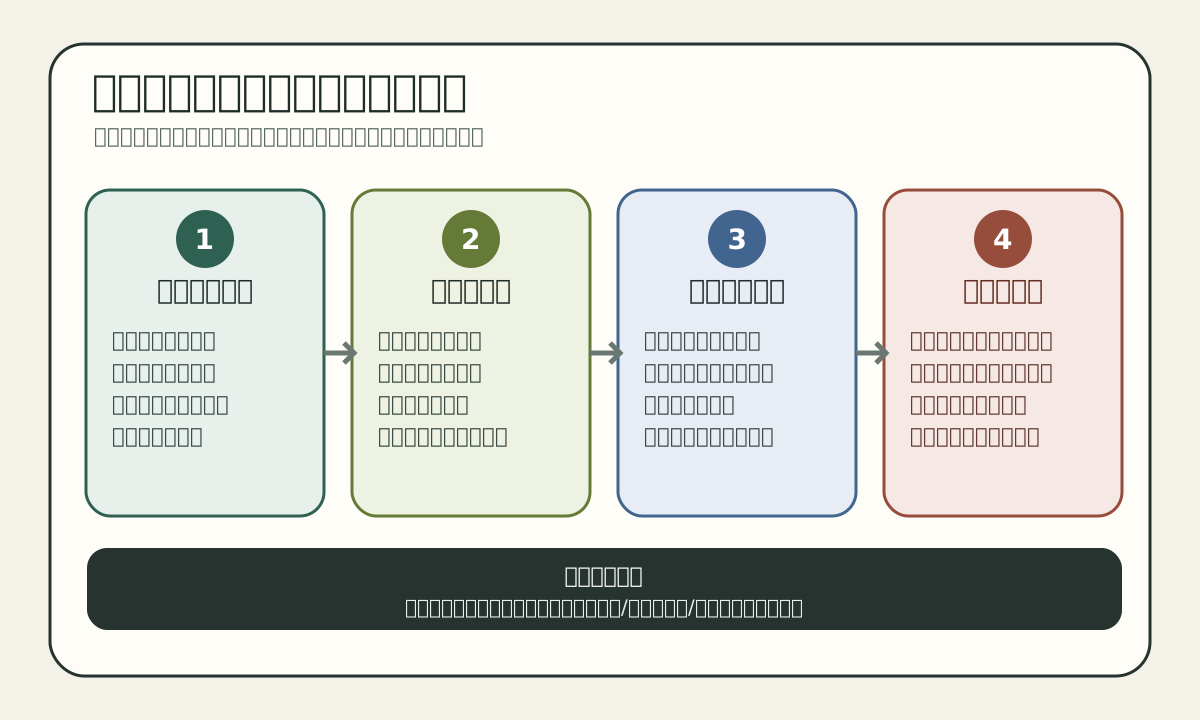
Decision flow when the outdoor unit appears stopped
Use the operating mode and model-specific indication to separate normal control from abnormal signs or a failure to resume.
Evidence 1
The outdoor unit normally remains stopped in fan-only mode
Hitachi says fan-only mode circulates indoor air without heat exchange, so the outdoor unit remains stopped. Internal drying and automatic cleaning labels require the exact model manual.
Hitachi: outdoor unit stops during operation (Japanese)Evidence 2
The outdoor fan can pause after the set point is reached
Hitachi says the outdoor fan may pause after the set temperature or humidity is reached and resume when conditions change. It advises inspection when the unit remains stopped after the listed checks.
Hitachi: outdoor unit stops during operation (Japanese)Evidence 3
Heating defrost can pause warm air and make the outdoor unit appear stopped
Daikin explains that heating pauses while frost is melted and warm indoor air stops temporarily. Lamp behavior and the return sequence remain model-specific.
Daikin: what defrost operation means (Japanese)Evidence 4
Published defrost durations differ and are not one universal limit
Panasonic gives an example up to about 12 minutes, while Hitachi gives a usual 5 to 10 minutes and a maximum around 22 minutes. Different product guidance must not be converted into one all-brand limit.
Panasonic: heating pauses and defrost (Japanese)Official materials checked: 2026-10-04. Apply the instructions for the exact model and site.
Start with the operating mode: fan-only does not use the outdoor unit
The outdoor unit transfers heat during cooling, heating, and dehumidifying. Hitachi says fan-only mode circulates indoor air without heat exchange, so the outdoor unit remains stopped. Check whether the remote is set to fan, internal drying, or automatic filter cleaning. Similar labels can mean different functions, so use the manual for the indoor-unit model instead of another product's instructions.
Cooling or dehumidifying can pause after reaching the set point
Hitachi also explains that the outdoor fan can stop temporarily after room temperature or humidity reaches its setting, then resume when conditions change. Record the room response, set temperature, indoor airflow, length of the pause, and whether operation resumes rather than declaring a fault from one stopped moment. This does not mean every persistent no-cooling condition should simply be left to recover.
Heating defrost can pause warm air and the outdoor fan
Frost can form on the outdoor heat exchanger while heating. Daikin explains that the unit may pause heating to melt frost when buildup restricts airflow. Warm indoor air can stop, the outdoor fan may appear inactive, and some models produce steam or drainage. Do not pour hot or cold water on the unit. Observe the documented lamp pattern from indoors and compare it with the exact model manual.
There is no universal number of minutes to wait
Published examples differ: Panasonic describes defrost lasting up to about 12 minutes for its covered products, while Hitachi gives a usual 5 to 10 minutes and a maximum of about 22 minutes. These are manufacturer-specific examples, not one limit for every air conditioner. Use the model manual's lamp pattern and return sequence. If heating does not resume within the documented behavior or the abnormal stop keeps repeating, contact the retailer, maker, or a repair provider.
From a safe distance, check only for blockage and abnormal signs
Without climbing or reaching behind the unit, look for stored items, leaves, or a cover blocking the intake or discharge. Do not approach a moving fan, remove panels, insert a tool into the coil, pour water on the unit, or move its supports. State that a roof, wall, or railing-side unit cannot be checked safely. Stop observing if there is a burning smell, smoke, sparks, severe noise, strong vibration, or abnormal heat.
Record the conditions without recreating the symptom
Share both unit models, operating mode, set temperature, time, delay before the stop, indoor airflow, lamp color and pattern, remote error display, outdoor sound, steam or water, and whether operation resumed. Take a photo or video only from a safe position; do not restart solely to record the fault. Use the retailer or maker for warranty, recall, and model-specific codes, and confirm a local provider's scope before requesting site, power, or installation inspection.
Discussing an outdoor unit that remains stopped in Nagoya
Do not repeatedly restart the system merely to reproduce the fault. Share both unit models, operating mode, set temperature, lamp or error display, whether and when operation resumes, and any sound, odor, or vibration. Warranty and model-specific indications belong with the retailer or maker; site, power, and installation checks need a provider that clearly covers that scope. For enquiries to Tokai Home Everything, photos and records define the inspection and estimate, but do not identify the cause or final price by themselves.
References
Need help with the actual work?
Photos and a short description help us understand what work may be needed.