
Updated: 2026-10-03
After washing an AC filter: dry it fully and refit it correctly
A model-specific checklist for drying a washable air-conditioner filter, checking its orientation, and refitting tabs and locks before operation.
Short Answer
Do not put a washable air filter back into the indoor unit while it is still wet. Remove surface water gently, keep it away from direct sun and hot air, and let it dry fully in a ventilated shaded place. First check the exact model manual: air-purifying or deodorizing inserts may not be washable, and the front and back, left and right, grooves, tabs, locks, and reset procedure vary by model. Refit the completely dry filter without a raised edge or loose lock. Stop operation if the filter is torn or warped, cannot be secured, or the unit produces an unusual sound or warning light after refitting.
Checklist
- ・Use the model manual to identify which filters are washable
- ・Shade-dry fully and avoid direct sun or hair-dryer heat
- ・Refit the correct face, grooves, tabs, and locks for that model
- ・Do not run the unit with a torn, warped, raised, or unsecured filter
Evidence guide
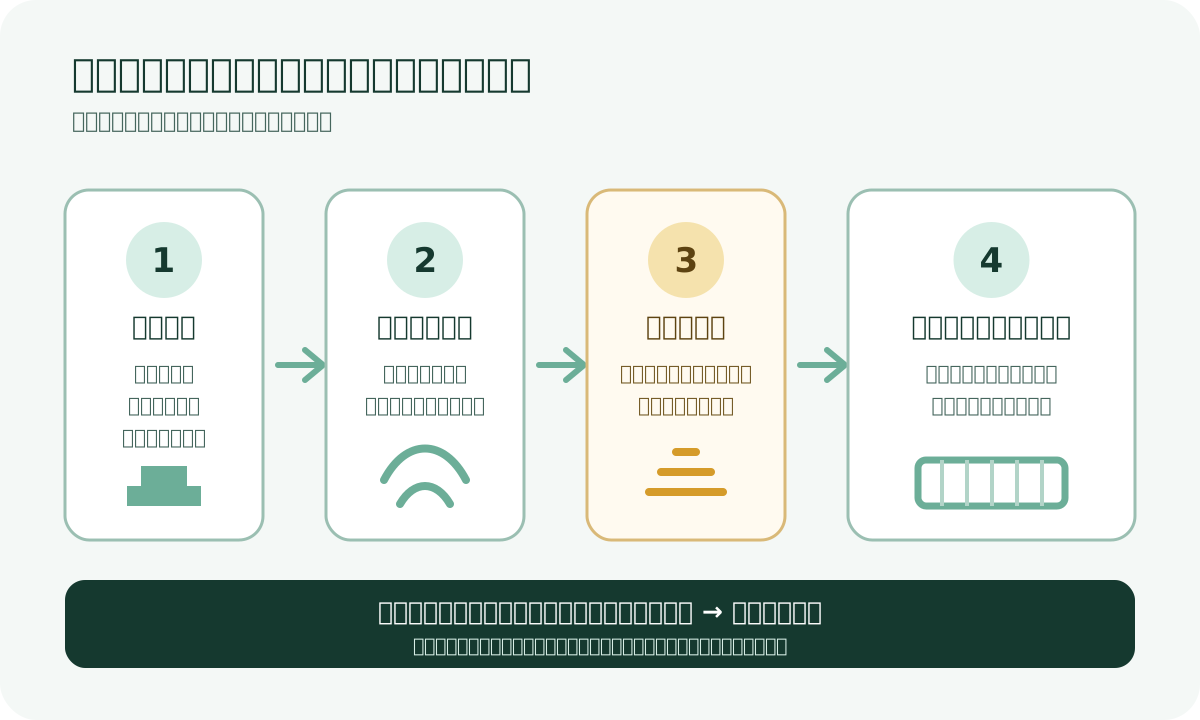
Wash, dry, and refit flow
Confirm that the exact part is washable, clean it gently, shade-dry it fully, then use the model-specific orientation and locks when refitting.
Evidence 1
Some treatment filters must not be washed
Panasonic describes washing the main air filter but says that several air-purifying, antibacterial, and deodorizing inserts are not washable. The name alone does not establish another maker's material, so check the exact model manual.
Panasonic: air-conditioner maintenance (Japanese)Evidence 2
Avoid direct sun and hot air; dry thoroughly in shade
Panasonic advises shade drying without direct sun or hair-dryer heat, while Hitachi calls for thorough indoor shade drying. Drying time depends on the filter and environment, so no universal number of hours is claimed.
Panasonic: washing and drying an AC filter (Japanese)Evidence 3
Do not refit before the filter is dry
Daikin warns that insufficient drying before refitting can contribute to bacterial growth, mold, and unpleasant odor. This does not guarantee that drying alone resolves existing internal odor or buildup.
Daikin: air-conditioner cleaning guidance (Japanese)Evidence 4
Follow the model diagram for face, grooves, tabs, and locks
Hitachi illustrates orientation marks, grooves, tabs, locks, and checking that the filter is not raised. It also warns against operating with the filter removed. Other brands require their own model instructions.
Hitachi: air-filter maintenance and refitting (Japanese)Official materials checked: 2026-10-03. Apply the instructions for the exact model and site.
Identify the exact filter before adding water
An indoor unit can have a main dust filter plus separate air-purifying, antibacterial, or deodorizing inserts. Panasonic says its main air filter may be washed, while several optional or treatment filters must not be washed. Names and appearance are not enough to identify the material. Search the indoor-unit model number, open the official maintenance instructions, and confirm which part is removable, whether water and detergent are allowed, and how it should be released.
Check the shutdown method, orientation, and locks before removal
Stop operation and follow the model manual for the plug or breaker. Front panels, left and right filters, cleaning mechanisms, tabs, and locks differ between units. Do not force a filter out while an automatic cleaning mechanism is out of position. Before removal, note the front and back marks, grooves, tabs, and lock locations that can be seen safely. Do not work from an unstable ladder merely to reach the panel.
Wash gently and use detergent only when the manual allows it
Remove loose dust with a vacuum on a low setting before washing. Use a soft cloth or sponge without pressing or scrubbing hard. Some models permit diluted neutral detergent for oily buildup, but the permitted product, dilution, and water temperature belong to the model instructions. Rinse away detergent completely. Avoid stiff brushes, twisting, folding, and hot water that can damage the mesh or frame.
Remove surface water, then dry in shade without hot air
After rinsing, do not swing the filter to throw water off. Blot it gently with a soft cloth and leave it in a ventilated shaded place. Panasonic, Hitachi, Mitsubishi Electric, and Daikin guidance all call for thorough shade drying. Direct sunlight can degrade or distort some materials, and a hair dryer or heater can add damaging heat. Drying time varies with material, room temperature, humidity, season, and airflow, so one fixed number of hours does not prove that every filter is dry.
Refit only when dry, with every groove, tab, and lock seated
Daikin warns that refitting before the filter is dry can contribute to bacterial growth, mold, and unpleasant odor. Once dry, follow the illustrated model instructions for face, side, groove, tab, and lock position. Hitachi guidance tells users to check that a filter is not raised and notes that incorrect installation can trigger a cleaning warning. Do not operate an indoor unit with its required filter removed.
Automatic filter-cleaning models add model-specific steps
An automatic cleaning feature does not mean every maintenance part uses the same method. A dust box, non-washable insert, cleaning wiper, and main filter can each have different instructions. Some models also require a cleaning reset after reassembly. Do not copy a video for a similar-looking model; verify the complete refitting and reset sequence for the exact model number.
Stop if the filter will not fit, or deeper symptoms remain
Do not run the unit when the mesh is torn, the frame is warped, a tab or lock will not seat, or an unusual sound or warning appears after refitting. Ask the retailer or maker for the correct part or procedure. If a correctly fitted filter does not resolve deep dark buildup, odor, leakage, or weak airflow, do not dismantle the blower or electrical area. Share the model, installation, symptom, and parts cleaned so a provider can separate cleaning from inspection or repair.
When dirt or odor remains beyond the filter
If odor, dark buildup behind the outlet, or weak airflow remains after the correct filter care, the unit may need inspection beyond user-removable parts. Standard wall-mounted AC cleaning starts from ¥10,000; self-cleaning models start from ¥16,000, including tax. Share the model, installation, and remaining symptom. These are starting prices rather than a flat total for every model or added task, and leakage or a suspected fault is assessed separately from cleaning.
References
- Daikin: washing, shade drying, and risks of insufficient filter drying (Japanese)
- Panasonic: washable air filters and non-washable treatment filters (Japanese)
- Panasonic: shade drying without direct sun or hot air (Japanese)
- Mitsubishi Electric: model-specific removal, refitting, and shade drying (Japanese)
- Hitachi: washing, shade drying, orientation, tabs, and locks (Japanese)
Need help with the actual work?
Photos and a short description help us understand what work may be needed.