Updated: 2026-10-03
Burning smell from an air conditioner: stop use and prepare a safe repair enquiry
What to do after a burning smell from an indoor unit, outdoor unit, plug, or outlet, and what to record without restarting the air conditioner.
Short Answer
Do not restart an air conditioner to reproduce a burning smell. NITE and manufacturer safety guidance list burning odor, abnormal plug heat or discoloration, smoke, and repeated breaker trips as stop-use signs. If there is visible smoke or fire, move away and call emergency services. Otherwise, isolate power only when the appliance manual allows it and the plug or breaker can be reached safely. Record the model, where and when the smell occurred, the operating mode, display, sound, and any recent cleaning, then contact the retailer, manufacturer repair desk, or an appropriate local repair provider.
Checklist
- ・Do not restart the unit to confirm the smell
- ・Move away and call emergency services for visible smoke or fire
- ・Do not touch a wet, discolored, or abnormally hot plug or outlet
- ・Record the model, location, timing, mode, display, and recent work
Evidence guide
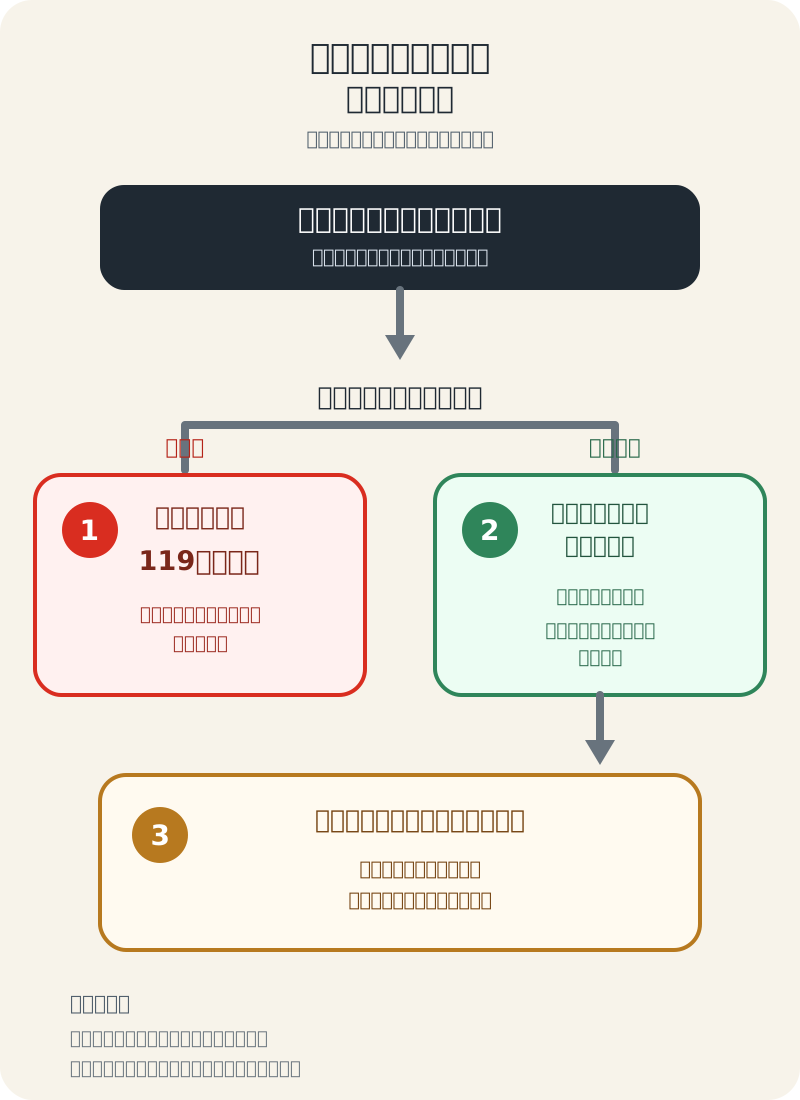
Stop-and-contact flow after a burning smell
This diagram does not identify a failed component from the room. It separates immediate danger from the information needed for a repair enquiry without restarting the unit.
Evidence 1
For visible smoke or fire, call from a safe place
Japan's Fire and Disaster Management Agency advises evacuating when smoke or fire is spreading and calling 119 from a safe place. This does not classify odor alone as a fire; it applies when smoke, flame, sparks, or another immediate danger is visible.
FDMA: how to make an emergency call during a fire (Japanese)Evidence 2
A burning smell requires stopping rather than retesting
NITE advises stopping use, disconnecting power, and contacting the retailer or repair desk after a burning smell from the indoor or outdoor unit. This is not an instruction to approach an unsafe electrical part.
NITE: preventing AC smoke and fire incidents (Japanese PDF)Evidence 3
Other electrical warning signs support the stop-use decision
Daikin lists burning odor, abnormal cord or plug heat, plug discoloration, and frequent breaker trips among warning signs in a long-used air conditioner.
Daikin: safety signs in long-used ACs (Japanese)Evidence 4
A burning smell after internal washing also needs inspection
Mitsubishi Electric warns that incorrect internal washing can damage insulation and cause smoke or fire, and tells users to stop and request inspection after abnormal signs. It does not prove one cause for every model.
Mitsubishi Electric: room AC safety guidance (Japanese)Official materials checked: 2026-10-03. Apply the instructions for the exact model and site.
Treat a burning smell differently from a musty odor
A musty or damp odor can sometimes point to filter or internal buildup. A smell like heated plastic or wiring, especially with smoke, sparks, or abnormal heat, is not a condition to test with more cleaning. Odor alone cannot identify a failed component, but an electrical or wiring fault cannot be ruled out safely from the room, so operation should stop.
Stop first; do not run the unit again for diagnosis
NITE advises stopping use and disconnecting power before contacting the retailer or repair desk when an air conditioner smells burnt. Daikin similarly lists burning odor, abnormal cord or plug heat, plug discoloration, and frequent breaker trips as warning signs. Follow the exact model manual only when the power control is safely reachable and there is no smoke, flame, wet electrical part, abnormal heat, or discoloration. Otherwise, do not touch it.
Visible smoke or fire takes priority over documentation
If smoke or flame is visible from the indoor unit, outdoor unit, plug, or outlet, do not move closer to take photos or operate the power. Move people to safety and call emergency services. Do not approach a plug or distribution board that cannot be reached safely. Even if the visible smoke stops, do not restart or dismantle the equipment; follow the instructions from emergency responders and the repair contact.
Record the location, timing, and accompanying signs from a safe distance
Tell the repair contact whether the odor appeared at the indoor unit, outdoor unit, plug, or outlet; how long the unit had been running; and whether it was cooling, heating, or dehumidifying. Separately note smoke, unusual sound, vibration, shutdown, error display, breaker trip, or leakage. Photograph a label or display only when it can be done safely. Never restart the unit merely to capture a video.
Mention extension cords and recent internal cleaning
NITE documents incidents involving improper cord connections, extension leads, poor contacts, and cleaning liquid reaching electrical parts. Tell the repair contact about an extension lead, loose plug, recent internal wash, or retail cleaning spray. Do not move wiring to search for the cause, open electrical covers, touch the outdoor unit internally, or apply water.
Choose the contact by the question that must be answered
For warranty, recall, and model-specific instructions, prepare the exact model and contact the retailer or manufacturer repair desk. If the site, outlet, wiring, or installation also needs inspection, ask a provider that clearly states the relevant scope and share the symptoms first. Tokai Home Everything is not a manufacturer service desk; for enquiries in Nagoya, photos and records are used to organize the on-site inspection scope.
Prepare the model, location, time, operating state, and recent changes
Useful details are the indoor- and outdoor-unit models, odor location, date and time, operating mode, set temperature, time until the symptom, error display, breaker state, and any recent cleaning or installation work. A smell disappearing or a breaker resetting does not prove safety. Do not decide to resume use until the relevant fault and repair scope have been checked.
Discussing a burning smell in Nagoya
Do not restart the unit merely to check whether the smell has disappeared. Share the model, odor location, time, operating mode, display, sound, and breaker state. Warranty or recall questions belong with the retailer or manufacturer; site, outlet, and installation checks need a provider that clearly covers that scope. For enquiries to Tokai Home Everything, photos and records help define the inspection and estimate, but they do not identify the fault or final price by themselves.
References
- Fire and Disaster Management Agency: emergency calls and evacuation during a fire (Japanese)
- NITE: air-conditioner smoke and fire incidents and stop-use guidance (Japanese PDF)
- Daikin: burning odor and electrical warning signs in long-used air conditioners (Japanese)
- Mitsubishi Electric: abnormal-condition and post-cleaning safety guidance (Japanese)
Need help with the actual work?
Photos and a short description help us understand what work may be needed.