
Updated: 2026-10-04
Before replacing an air conditioner in a rental or condominium: questions for management
A pre-purchase checklist for rentals and condominiums: equipment ownership, written approval, wall openings and outdoor-unit rules, work notices, and restoration records.
Short Answer
Before choosing a replacement AC for a rental or condominium, confirm five things: who owns the current unit; whose approval is required; whether the existing wall opening, cover, and outdoor-unit location may be reused; what application, protection, access, and working-hour rules apply; and how the removed unit and installation marks must be handled when moving out or selling. MLIT standard leases and condominium bylaws are models, not identical rules imposed on every property. Use the actual lease, disclosure documents, building bylaws, detailed rules, and written response from the owner or management body, then share the approved scope with the installer before purchase.
Checklist
- ・For a rental, identify whether the current unit is landlord equipment, a leftover item, or yours
- ・For a condominium, check rules for structural walls, the exterior, balconies, and shared facilities
- ・Ask separately about drilling, exterior covers, outdoor-unit position, drainage, and power changes
- ・Confirm applications, drawings, contractor details, protection, working hours, and carrying access
- ・Record disposal, wall-opening, fixing-mark, cover, and move-out restoration decisions
Evidence guide
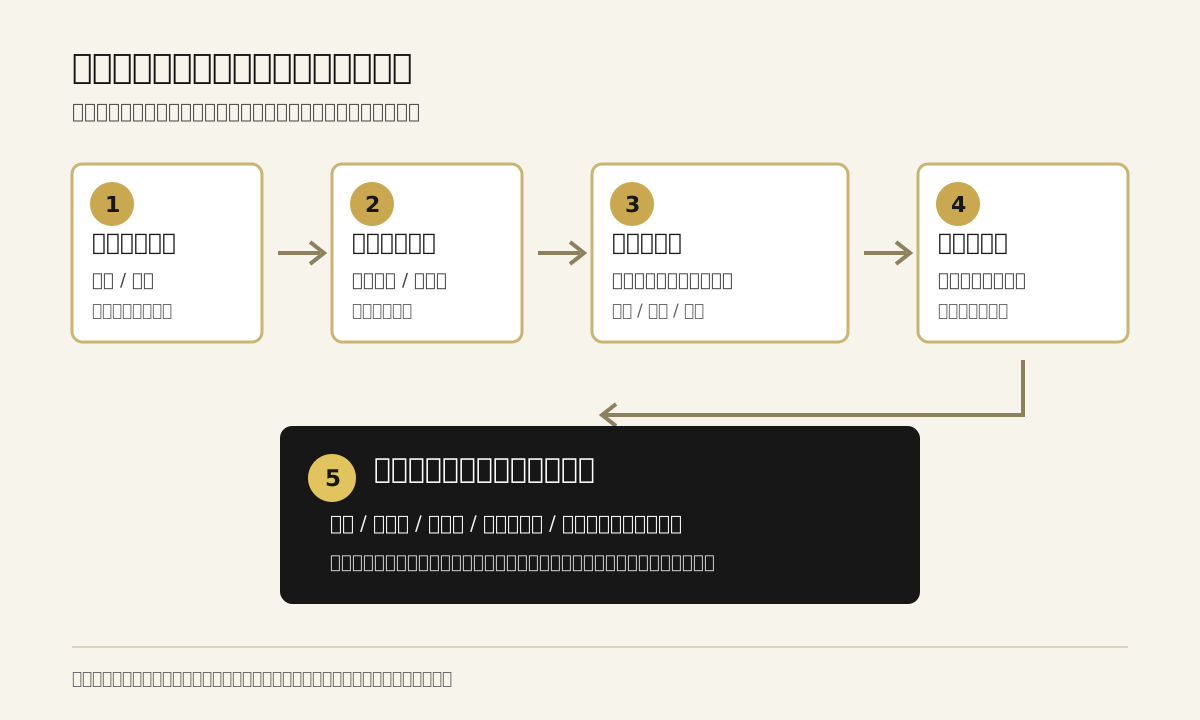
Five stages for approval and site checks before purchase
Separate rental and condominium decision-makers, then record the approved scope, notice rules, installation conditions, and post-removal obligations before purchase.
Evidence 1
Use the actual lease and consent terms before altering a rental
MLIT's model lease includes written landlord consent for alteration and remodeling. MLIT also states that use of this model is not legally mandatory, so the actual lease and special clauses take priority.
MLIT: Standard Residential Lease (Japanese PDF)Evidence 2
A condominium check includes effects on common property
MLIT's 2025 model bylaws distinguish structural walls and openings and treat balconies as common property subject to exclusive use. The model requires advance approval for work that may affect common property or another unit. Each building's actual bylaws control.
MLIT: 2025 Standard Condominium Management Bylaws (Japanese PDF)Evidence 3
Contractor access or noise may require notice without formal approval
The same model calls for notice when contractor access, material delivery, noise, vibration, or odor needs to be known in advance. Actual forms, lead times, and working hours come from the building.
MLIT: 2025 Standard Condominium Management Bylaws (Japanese PDF)Evidence 4
Approval still requires the exact product instructions and site check
JRAIA tells installers to perform installation in accordance with the manufacturer's installation instructions. Management approval, photos, or an existing opening do not establish fit or total cost by themselves.
JRAIA: installation safety guidance (Japanese)Official materials checked: 2026-10-04. Apply the instructions for the exact model and site.
Begin with ownership of the existing air conditioner
In a rental, a failed built-in unit may be landlord equipment, a former occupant's leftover item, or a unit owned by the current tenant. Check the lease and disclosure documents before appointing an installer. If it is landlord equipment, ask management who decides between repair and replacement, who appoints the contractor, and who pays. For a tenant-owned unit, confirm ownership after replacement, old-unit disposal, and whether the replacement must be removed or may remain at move-out. Keep a response that identifies the property, room, and unit rather than relying only on a verbal memory.
For a rental, describe the complete work and ask whether written consent is required
MLIT's Standard Residential Lease contains a model clause against alteration or remodeling without the landlord's written consent. The model is not mandatory and does not replace the actual lease. Describe reuse of an existing opening, new drilling, the indoor mounting plate, exterior trunking, outdoor-unit arrangement, and any dedicated-outlet or voltage change separately. A general answer that replacement is allowed may not settle holes, covers, electrical work, or removal. Ask what the consent covers before buying the unit.
A condominium interior project can still engage building bylaws
MLIT's 2025 Standard Condominium Management Bylaws treat structural wall portions, window frames, and glazing differently from the interior finish, and classify balconies as common property subject to exclusive use. The model also calls for advance application and approval for work that may affect common property or another unit. It is not the rulebook for every building. Check the actual bylaws, detailed use rules, and work-application form for wall openings, outdoor-unit fixing, drainage, evacuation space, and exterior appearance.
A notice may still be required when formal approval is not
The standard bylaw model provides for notice where contractor entry, material delivery, noise, vibration, or odor needs to be known in advance, even if the work does not require formal approval. An actual building may request the contractor name, vehicle, date and hours, drawings, specifications, elevator protection, corridor covering, or resident notice. Lead time varies, so do not fix an installation date first. Ask management what is required and give the installer the exact model and approved scope for the form.
Match the approved scope to the hole, piping, power, and outdoor location
Permission does not prove that the proposed model fits. Safely photograph the existing indoor model and wall, outlet, outside of the distribution board, opening and cover, outdoor model and location, visible drainage, and carrying route. The installer must determine whether the opening and concealed piping can be reused, whether the cabinet fits, and whether power changes are needed from the exact installation instructions and site. JRAIA also tells installers to follow the manufacturer's installation instructions. Photos prepare the check; they do not establish feasibility or extra cost.
Decide the post-removal condition before work begins
Rental restoration is not one rule requiring every surface to be returned to new condition. The actual lease, special clauses, installation consent, and cause of any damage matter. MLIT restoration guidance and the standard lease provide general frameworks rather than deciding an individual contract. Record who disposes of the old unit; how the sleeve, putty, fixing marks, and exterior cover are left; and whether the replacement remains or is removed at move-out. Condominium owners should also retain the approval and work record for future maintenance or sale.
Discussing apartment or condominium AC replacement in Nagoya
Our air-conditioner installation starts from ¥26,000, including tax. This is a current starting price, not a flat total covering old-unit removal or disposal, wall-opening or cover restoration, building-mandated protection, high access, piping, or electrical work. Share the work scope confirmed in the lease or building rules, the proposed model, indoor and outdoor photos, and any application or working-hour requirements. We check the approval conditions and site, then explain the required scope and total before work begins.
References
Need help with the actual work?
Photos and a short description help us understand what work may be needed.